



- Can Mac Write To Exfat For Use By Microsoft Teams
- Can Mac Write To Exfat For Use By Microsoft Office 2007
- Can Mac Write To Exfat For Use By Microsoft Word
- Can Mac Write To Exfat For Use By Microsoft Office 2016
External hard drives are important storage media for both Mac and Windows users. Usually, you can read and write to files on an external hard drive on your Mac. But there are chances that this external hard drive shows read-only on Mac.
Turns out exFAT exists so that Mac and Windows can co-exist harmoniously. There are many forum discussions and how-to articles out there recommending exFAT if you want to share files between Mac and Windows. What most of them failed to mention is the correct allocation unit size / cluster size necessary for the harmonious relationship to work. Mount Microsoft NTFS Driver for Mac for Read-Write Access Though Mac does not write to NTFS, you could install the Microsoft NTFS driver for Mac for writing access. There are various NTFS drivers in the market, which can get the read-write compatibility for Mac computer. Mac OS X Snow Leopard 10.6.5 and later can create, read, write, verify, and repair exFAT file systems. Linux has support for exFAT via FUSE since 2009. In 2013, Samsung Electronics published a Linux driver for exFAT under GPL. On 28 August 2019, Microsoft published the exFAT specification and released the patent to the OIN members. Mac OS Extended. Choose one of the following Mac OS Extended file system formats for compatibility with Mac computers using macOS 10.12 or earlier. Mac OS Extended (Journaled): Uses the Mac format (Journaled HFS Plus) to protect the integrity of the hierarchical file system. Choose this option if you don’t need an encrypted or case-sensitive.
You may be wondering why you can't write to this external hard drive even though you are the owner of this disk, and more importantly, if you can fix this read-only problem without formatting or not?
There are mainly three causes for this issue:
- The read-only external hard drive is NTFS file system
- You only have read permission to this external hard drive
- You can't write to external hard drives on Mac due to disk corruption
For example, many people have reported that their WD My Passport external hard drives are read-only on Mac. When you check its disk information, you will find you can only read the external hard drive on Mac. Moreover, users who use USB flash drives and SD cards on Mac also encounter this read-only problem.
Thus, this post will analyze three external hard drive read-only cases so that you can find a relevant and feasible solution to your problem.
Case 1: The read-only external hard drive is NTFS file system
A file system controls how data is stored and retrieved on a disk. There are many different kinds of file systems, and each one has different structure and logic, properties of speed, flexibility, security, size, etc. By default, Windows uses Microsoft NTFS file system while Macs use HFS+ and APFS for OS volume. FAT32 and exFAT are usable for both Windows and Mac operating systems.
That's to say, you are unable to write to NTFS drives on macOS Big Sur, Catalina, Mojave, and any earlier Mac operating systems.
If you try to copy or drag files on an NTFS-formatted external hard drive on Mac, you'll be unable to but see the greyed-out no symbol as below. And when you open files on this external hard drive, you will find your documents being read-only. For an NTFS file system SD card on Mac, files like photos are locked as you can only read them.
Therefore, if you find your external hard drive read-only, for example, a Seagate external hard drive shows read-only on Mac, the first thing that comes to your mind should be to check if this drive is NTFS file system.
How to check if an external hard drive is NTFS file system on Mac?
Simply, you can check this by viewing its disk information either in Disk Utility or in the Finder, and here is how.
Method 1: Check if an external hard drive is NTFS file system in Disk Utility
- 1. Click on Launchpad at the dock of your Mac and choose Other in the menu.
- 2. Choose Disk Utility among these utilities and open it.
- 3. When it is launched, click on the external hard drive you have problem with in the left sidebar. You will see an obvious 'Windows NT File System' in the right column.
Method 2: Check if an external hard drive is NTFS file system in the Finder
You can also check this in the Finder with a few clicks.
- 1. Open the Finder and right-click on this external hard drive.
- 2. Choose Get info in the context menu.
- 3. You will see 'Windows NT File System (NTFS)s' after File system if the read-only drive is formatted with Microsoft NTFS file system.
Then, after making sure that it is the Windows NTFS file system that makes your external hard drive read-only on Mac, you can go head to fix this problem. Try to repair the read-only external hard drive with or without formatting.
Solution 1: Using NTFS for Mac tool
If you have several important files on this external hard drive, and you frequently swap your work between Windows and Mac computers, formatting this drive definitely is the last solution you would resort to. The reason is, as you may know, formatting a hard disk will wipe your data out of this drive and cause data loss.
Then when external drive is NTFS-formatted, how can you fix the read-only drive without formatting?
An NTFS driver for Mac should be the most convenient tool for people who want to fix this issue without formatting, because you can work natively and seamlessly on NTFS file system external hard drives on your Mac in a few clicks. The NTFS for Mac software you can try is iBoysoft NTFS for Mac to make the NTFS drives writable on Mac.
About iBoysoft NTFS for Mac
iBoysoft NTFS for Mac can mount NTFS external hard drives in read-write mode on your Mac, granting people full access to read, write, edit, copy, and delete files on NTFS-formatted drives.
iBoysoft NTFS for Mac- Best NTFS Disk Management for Mac
- Grant full access to Windows NTFS file system on Mac
- Read, write, modify, transfer, and delete files on NTFS drives on Mac
- Erase disks to NTFS file system on Mac
- Unmount multiple drives with one click
- Support macOS 11 to macOS 10.13
iBoysoft NTFS for Mac is also a wonderful tool to manage NTFS external drives on Mac. It's a menu bar app, from which users can mount, repair, erase NTFS hard drives, external hard drives, SD cards, USB flash drives, etc. with a simple click.
Tutorial to write to NTFS-formatted external hard drive on Mac with iBoysoft NTFS for Mac
- 1. Free download and install iBoysoft NTFS for Mac on your computer, and then restart the Mac.
- 2. Connect NTFS external hard drive to Mac and launch iBoysoft NTFS for Mac.
- 3. Write to NTFS external hard drive after the external hard drive is mounted successfully.
Solution 2: Enable NTFS read-write with Terminal (not recommend)
You can also try the experimental method to enable NTFS read-write support with command prompt on your Mac. However, it is not recommended as it is not stable and could result in data loss if it goes wrong. So, use the command line with caution!
Warning: Do not use this method as a long-term solution to write to NTFS drives that contain important files. Meanwhile, do not use this method if you are not familiar with the command line, in case that you input a wrong command and cause unexpected damage to your Mac and drives.
Well, if you insist…here is how to do this:
- 1. Click Go at the upper right of your desktop and go to the Applications > Utilities > Terminal.
- 2. Input 'sudo nano /etc/fstab' to edit the fstab file (supply your password when prompted).
- 3. Type 'LABEL=NAME none ntfs rw,auto,nobrowse' in the editor window for the fstab file. (Be sure to change the word NAME to the name of your drive)
- 4. Press Control + O to save the file, followed byControl + X to exit.
- 5. Unmount your NTFS drive and attach it again.
Solution 3: Format this external hard drive to exFAT/FAT32
It is possible that you just recently bought a new hard drive and found it is formatted as NTFS. In this case, if you don't have anything important on this drive or you have a copy of a data backup, you can simply format this external hard drive without worrying about data loss. To formatting this read-only hard drive, you can just go to Disk Utility and Erase it.
There are several formats you can choose, and erasing this disk into which file system depends on how you intend to use the drive.
- APFS: If you plan to use the drive on macOS 11 Big Sur, 10.15 Catalina, macOS 10.14 Mojave, and macOS 10.13 High Sierra, you can format it into APFS for better experience.
- HFS+: It is also known as Mac OS Extended, whose later versions added journaling to prevent corruption of the file system structure. Therefore, you can choose HFS+ if you are going to use this external hard drive on macOS Sierra and earlier Mac operating systems.
- FAT32/exFAT: If your storage device is an SD card or USB flash drive, and you'd like to read-write this portable drive both on Mac and Windows OS, you'd better erase it with exFAT or FAT32.
Case 2: Disk permissions are changed as read-only
The Sharing and Permissions option is set up to determine who can delete or modify a file or program copied to the drive. Thus, if the permissions are changed by you or others, a message will pop up and inform you that the file is read-only or you don't have permission to save when you save changes to this disk.
In this case, if you right-click on the icon of your disk and choose 'Get info' to check the disk information, you will find you can only read this external hard drive or SD card even though it is not NTFS file system. That's to say, you can't write to this drive.
If this is the cause for your external hard drive being read-only, you can try the following solutions and fix this issue without formatting your drive.
Solution 1: Change the permission of this external hard drive
If your files on this external hard drive show as read-only or locked, or if you try to move some files to the Trash but get no response, you can try to change the permission of this disk.
- 1. Open the Finder and find your external hard drive in the left sidebar.
- 2. Right-click on this drive or volume and choose Get info, and then scroll down to Sharing & Permissions.
- 3. Extend this column by clicking on the triangle symbol, and then click on the Lock icon.
- 4. Input the password of your Mac, and click on Read only, then change your privilege as Read & Write in the right column.
- 5. Click the gear button (Action menu) at the bottom of the window, choose Apply to enclosed items, and then click OK to confirm the action.
Solution 2: Ignore Permissions on external hard drive in the Finder
To prevent such errors from happening, Mac operating system includes a setting to ignore Permissions on external drives, so all files on the drive should be fully accessible regardless of their Permissions settings. Here below are steps to ignore the permission on external hard drives:
Step 1: Select the external hard drive on your desktop or in the Finder sidebar, and then press Command + I to get information on the drive.
Can Mac Write To Exfat For Use By Microsoft Teams
Step 2: Click on the arrow that is on the left side of the Sharing & Permissions tab near the bottom of the window.
Step 3: Check the box to Ignore ownership on this volume, or toggle it off and then on if it's already enabled. (Provide the password of your Mac if it is required.)
Case 3: Can't write to corrupted external hard drives on Mac
Some internal errors will cause a drive to be read-only as well. When this happens, your drive will be only mounted in read-only mode to prevent the data on it from corruption.
Solution: Repair read-only external hard drive with Disk Utility
Fortunately, you can take some actions to repair these minor disk errors with Disk Utility on your Mac. You can use the following guide to fix read-only external hard drive in Disk Utility without formatting.
- Step 1: Click Go at the upper right of your desktop and go to Utilities, and then open Disk Utility.
- Step 2: Select the read-only external hard drive on the left window.
- Step 3: Click First Aid in the and choose Run.
However, it is possible that an NTFS format is not the culprit of your disk being read-only. On the contrary, some other reasons make your disk not writable. For instance, if your disk becomes read-only after a macOS update, you may be facing one of the rare glitches of a macOS. Under this circumstance, if the solutions above are unable to fix this read-only external hard drive, you may need to format this drive, and then recover your important data from the formatted external hard drive instead.
Bonus part: Fix SD card read-only on Mac
Except for external hard drives, memory cards like micro SD cards and SDHC cards could be read-only on Mac as well. It could occur when your SD card is write protected, whether you access the SD card via a card slot or connect the camera to the Mac. If you have tried the solutions mentioned above and none of them work for you, here is a bonus tip.
Can Mac Write To Exfat For Use By Microsoft Office 2007
Solution 1: For most cases, you need to make sure that you slide the write protection switch to the unlocked positition. It's possible that some USB SD card adapters don't honor that switch, but the card reader on Mac definitely does.
Solution 2: If the SD card is read-only on Mac still, you may want to slide the read-write lock to the middle neutral position and retry. Strange though, sliding the 'lock' switch on the card halfway does help mount SD cards in read-write mode.
Conclusion
Generally speaking, external hard drives being read-only on Mac appears when they are not formatted correctly and the solutions above should be helpful. Nevertheless, if you failed to repair this hard disk even with Disk Utility, it could be a failed external hard drive which needs to be replaced, or you can try your luck by sending it to a local disk repair service.
Quick Navigation :
What Is exFAT?
exFAT is an acronym for Extended File Allocation Table which is a file system introduced by Microsoft in 2006. It is created to be used on flash memory like USB flash drives, SD cards and so on.
Can Mac Write To Exfat For Use By Microsoft Word

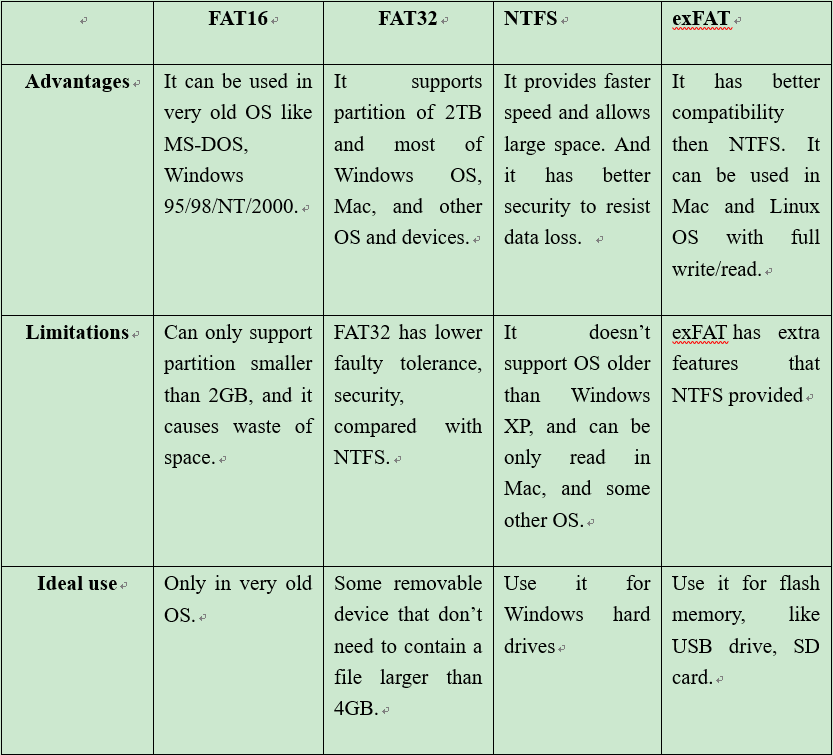
The name of exFAT gives a hint for its precursors: FAT file system. exFAT is a newer version of the FAT32 file system, and you can think it this way: it is a middle ground between FAT32 and NTFS file system (New Technology File System).
The Pros of exFAT
exFAT is a file system that is optimized for flash drives. For that purpose, exFAT has some of the main features that distinguish it from other file systems:
- exFAT is a lightweight file system that does not require maintenance of a large amount of hardware resources.
- It offers support for huge partitions, of up to 128 pebibytes, while 512 exbibytes is recommended.
- It supports huge file stored that is much larger than the 4GB limit imposed by FAT32. If you're curious, the theoretical file size limit is 16 exbibytes, but this exceeds the maximum partition dimension, so the actual size limit of a file stored on exFAT is the same as the partition limit: 128 pebibytes.
- Cluster size up to 32MB.
- exFAT adopts the remaining space allocation table, the performance of remaining space allocation improved.
- The maximum number of files in the same directory can reach 2,796,202.
- exFAT is more compatible with a lot of devices and operating systems than NTFS.
The Cons of exFAT
exFAT lacks the support of journaling (in fact, to some extent it is not a disadvantage, and we will explain the reasons in the next part). The journaling feature allows the file system to keep records of the changes made to the files stored on it. This is useful when data corruption occurs because the logs can be used to recover corrupted data.
exFAT does not have this feature, which means that data can be more susceptible to corruption in the event of an unexpected shutdown or the inability to safely eject a removable drive formatted in this way.
Its file allocation tables and file allocations themselves do not support multi-user environments and are susceptible to large file fragmentation. Few other file systems have this issue.
It is not quite as widely-supported as FAT32 does.
What’s the Benefits When You Choose exFAT for A Removable Media
We take the USB flash drive as an example to explain this issue. First of all, we mentioned that exFAT is between FAT and NTFS. Though for performance it cannot compare to NTFS, it does have features better than FAT32 which you can find in the pros of exFAT(last part).
Here we list one typical point. The USB flash drive which is formatted with FAT32 file system cannot have a single file over 4GB. Although there are few opportunities for a single file to exceed 4GB, it does not mean that there are not: original files for BD/HD movies, uncompressed audio files for lossless music lovers, ISO files for DVDs, etc., if you want a full backup, you must choose exFAT over FAT32 as the storage format.
Then you might ask why not choose NTFS? Yes, NTFS is a more powerful file system, but it is targeted 'log' file system requires frequent recording of disks during reading and writing, while a USB flash drive has a limit on the number of reading and writing, therefore, theoretically a USB flash drive which uses the NTFS format will have a relatively short lifetime. And the compatibility is a problem too.
Can Mac Write To Exfat For Use By Microsoft Office 2016
What’s more? The exFAT file system is compatibility with both Windows and Mac, so if you want to transfer data between computers with these two different operating systems, formatting a USB flash drive with exFAT is the best choice.
In summary, if you want to format a USB flash drive but don’t know which file system to choose, here are the advices:
- It is generally recommended to use the FAT32 format, which has the greatest compatibility.
- If you want a better performance experience, want to store large files, or use the drive between Mac and Windows, you can choose the exFAT format (might not be recognized by some devices other than the computer).
- NTFS format is not recommended.