



The Missing Package Manager for macOS (or Linux). It’s all Git and Ruby underneath, so hack away with the knowledge that you can easily revert your modifications and merge upstream updates. A package manager (like apt-getor brew) just gives your system an easy and automated way to install packages or libraries. Different systems use different programs. Aptand its derivatives are used on Debian based linux systems. Red Hat-ish Linux systems use rpm(or at least they did many, many, years ago).
Introduction
psql is the standard command line interface for interacting with a PostgreSQL or TimescaleDB instance. Here we explain how to install psql on various platforms.
How to Install apt-get on Mac OS X Fink can be used to install newer versions of packages installed by Mac OS X or to install packages not included in Mac OS X. Fink stores all its data in the directory “/sw” by default. This goes against the Filesystem Hierarchy Standard’s recommendation to use “/usr/local”.
Before you start
Before you start, you should confirm that you don’t already have psql installed. In fact, if you’ve ever installed Postgres or TimescaleDB before, you likely already have psql installed.
Install on MacOS using Homebrew
First, install the Brew Package Manager
Second, update brew. From your command line, run the following commands:
Finally, symlink psql (and other libpq tools) into /usr/local/bin:
Install on Ubuntu 16.04,18.04 and Debian 9,10
Install on Ubuntu and Debian using the apt package manager:
Apt-get Equivalent For Mac
Note: That this only installs the psql client and not the PostgreSQL database.
Install Windows 10
We recommend using the installer from PostgreSQL.org.
Last step: Connect to your PostgreSQL server
Let’s confirm that psql is installed:
Ext hd for mac. To find your best external hard drive for Mac, you’ll want to decide how quickly you want to save and retrieve data. Consider how you’ll be saving and transferring files, such as photos, videos, files from tablets, files from PC laptops, or photos from top-rated cell phones. Drive speed is measured in revolutions per minute (rpm), based on. May 09, 2019 The Best Mac External Hard Drive and SSD Deals This Week. WD Elements 4TB Portable USB 3.0 Hard Drive — $89.99 (List Price $139.99) Seagate Expansion 4TB External USB 3.0 Hard Drive — $94.99. LaCie Rugged Raid Pro 4TB External Hard Drive Portable HDD – USB 3.0 Compatible – with SD Card Slot, Drop Shock Dust Water Resistant, for Mac and PC Computer Desktop Workstation Laptop (STGW4000800) 4.5 out of 5 stars 4,822 $254.99$254.99.
Now, in order to connect to your PostgreSQL server, we’ll need the following connection params:
- Hostname
- Port
- Username
- Password
- Database name
There are two ways to use these params.
Apt-get For Mac
Option 1:
Once you run that command, the prompt will ask you for your password. (Which we specified with the -W flag.)
Option 2:
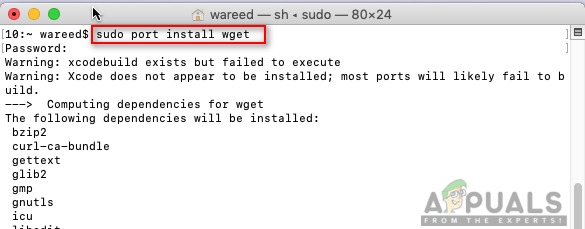
Congrats! Now you have connected via psql.
Apt Get For Mac

Apt-get Install For Mac
Install Homebrew
Paste that in a macOS Terminal or Linux shell prompt.
The script explains what it will do and then pauses before it does it. Read about other installation options.
What Does Homebrew Do?
Homebrew installs the stuff you need that Apple (or your Linux system) didn’t.
Homebrew installs packages to their own directory and then symlinks their files into
/usr/local.Homebrew won’t install files outside its prefix and you can place a Homebrew installation wherever you like.
It’s all Git and Ruby underneath, so hack away with the knowledge that you can easily revert your modifications and merge upstream updates.
Homebrew complements macOS (or your Linux system). Install your RubyGems with
gemand their dependencies withbrew.“To install, drag this icon…” no more. Homebrew Cask installs macOS apps, fonts and plugins and other non-open source software.
Donate to Homebrew
Homebrew Blog
Analytics Data
Homebrew was created by Max Howell. Website by Rémi Prévost, Mike McQuaid and Danielle Lalonde.